

finding balance: from the clinic to Bali
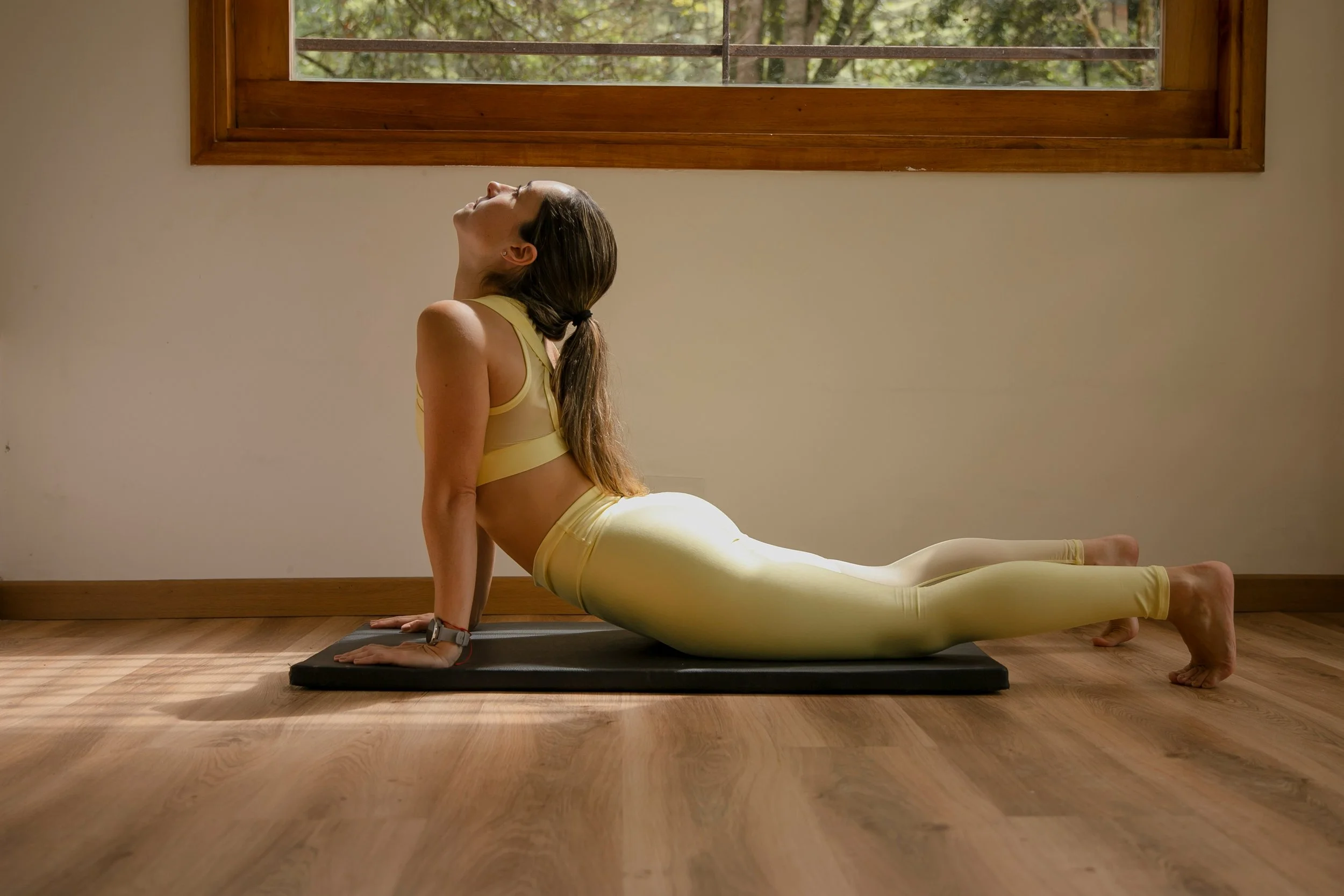
As a pelvic health physical therapist, I talk about balance all the time.
Balanced muscle tone.
Balanced nervous system input.
Balanced load and recovery.
But balance isn’t just something I teach in the clinic — it’s something I intentionally build into my own life.
At the end of the week, I’m heading to Bali for a yoga training focused on functional, breath-led movement and nervous system regulation — and if I’m honest, I feel a mix of excitement and nerves.
This will be my first trip away since starting my business. Building something of your own has a funny way of making you feel like you should always be “on.”
But here’s the thing: the work I do every day is rooted in regulation. And I can’t teach what I’m not actively practicing.
In pelvic health, I see constantly how chronic stress shows up in the body:
It shows up as pelvic floor tension.
As pain.
As urgency.
As difficulty fully relaxing.
Healing rarely happens in a state of constant go-go-go.
As a new business owner, I feel that drive too — the push to build, grow, achieve.
But balance is important to me. It always has been.
Because when I create space to reset, I show up as a better clinician — clearer, calmer, more grounded, and more present. And that matters.
Here’s the surprising part: I’ve never really been a “yogi.”
I’m much more of a high-intensity, running, strength training, hiking type of gal. I like to move. I like to push. I like to sweat.
Slow, intentional down-regulation? That’s not exactly my comfort zone — but that’s precisely why this feels so important.
I’m excited to learn, to grow, to regulate a little more deeply myself — and to bring back practices that will further support all of you.
And yes.. I’m also excited for the beauty, the culture and perhaps finding myself atop a volcano at sunrise (because no trip is complete without at least one epic hike, am I right?)
See you on the other side 🌿
